Nonprofit Rebranding: How to Know It's Time
By Brittany Hill · September 1, 2026
Nobody has ever landed on a nonprofit's homepage and thought "wow, incredible color palette." That's not how this works, and honestly, it's not supposed to be.
What people do notice is when they can't find the donate button. When the homepage doesn't say, in plain language, what the organization actually does. When the whole site feels like it was built for an org that stopped existing three strategic plans ago. Nobody calls that a branding problem out loud — they just quietly think "I couldn't figure out what this place does" and click away. You never hear about it. You just see the bounce rate.
So skip the question "does our brand look dated." Ask the one that actually matters: is our brand quietly costing us something we've never bothered to measure?
The tell isn't the logo
Every rebrand conversation starts the same way: "we're tired of our logo." Sometimes that's genuinely the whole problem — fair enough, logos get old. But usually the logo is just the part people can point at. The real issue is quieter: the organization outgrew its brand two or three program pivots ago, and nobody sent the website the memo.
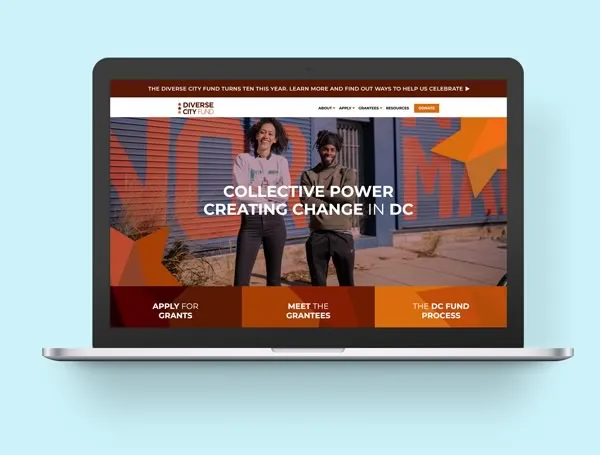
That was the situation for the Diverse City Fund, an organization dedicated to supporting people of the global majority in DC as they build power and drive social change. Their work had grown well beyond what their existing brand and site could hold — a robust, layered mission that needed a home built to actually carry it, not just decorate it.
What actually changes when you rebrand for real
A real rebrand isn't a new logo dropped onto an old structure. For Diverse City Fund, we rebuilt from the identity outward — a modern, expressive typeface, custom star elements symbolizing guidance and collective strength, and a warm palette designed to feel inviting rather than institutional. Then we built a new site structured to actually house their content clearly, instead of burying it.
The organization's Operations Manager, Tia Watkins, put it simply afterward: they were "so happy with our new online presence" — and pointed specifically to how smooth the collaboration felt, calling the team "flexible, but also diligent in holding us to deadlines."
View the Diverse City Fund Case Study →That combination — flexible enough to work with a nonprofit's real capacity, disciplined enough to actually finish — is usually what separates a rebrand that lands from one that stalls out in committee for eight months.
The signs worth paying attention to
You don't need a rebrand because your website turned five years old. You need one when:
- 01Your programs have grown or shifted, and your homepage still describes the organization you were three years ago
- 02Donors or partners have told you, more than once, that they didn't understand what you do until someone explained it in person
- 03Your team is manually working around your website instead of it working for you — copy-pasting because the CMS can't hold your content properly
- 04Your visual identity reads as generic-nonprofit rather than distinctly you
Any one of those is worth a conversation. Two or more, and the brand is actively costing you reach, trust, or donor confidence you can't easily get back.
Try This
Pull up your own homepage right now and give yourself 10 seconds — no more — to answer: what does this organization do, and for whom? If you hesitated, or had to scroll, that's the same experience a first-time visitor just had. Now ask two people outside your organization to do the same thing and time them. If none of you land on a clear answer inside 10 seconds, that's not a copywriting problem. That's a brand problem, and it's worth naming as one.
One Last Thought
A rebrand isn't really about looking better. It's about making sure the outside world sees the organization you actually are now, not the one you used to be. Get that right, and the "better design" part takes care of itself.
Recognize your organization in any of the signs above? Let's talk through what a rebrand would actually involve for your team. Curious what the process looks like day-to-day? See how it played out for Diverse City Fund.
Start a Project →Continue Exploring
Service
WEBSITE DEVELOPMENT
We offer a complete suite of web development services tailored to your needs. From custom websites and powerful e-commerce platforms to high-performing landing pages and ongoing maintenance and hosting, we design, build, and manage websites that are as smart as they are stunning.
Case study
Diverse City Fund
The Diverse City Fund is dedicated to supporting people of the global majority in Washington, DC as they build power, spark solutions, and drive meaningful social change. They partnered with us to refresh their brand and create a new website that could house their robust content in a clear, accessible, and engaging way.
Next step
Start a Project
Tell us what you need. We typically respond within one business day.
Let's build it
Start a Project
If this article sparked a next step, tell us what you need. We typically respond within one business day.