Why Your Website Is Getting Ghosted
By Sammy Kassim · November 10, 2026
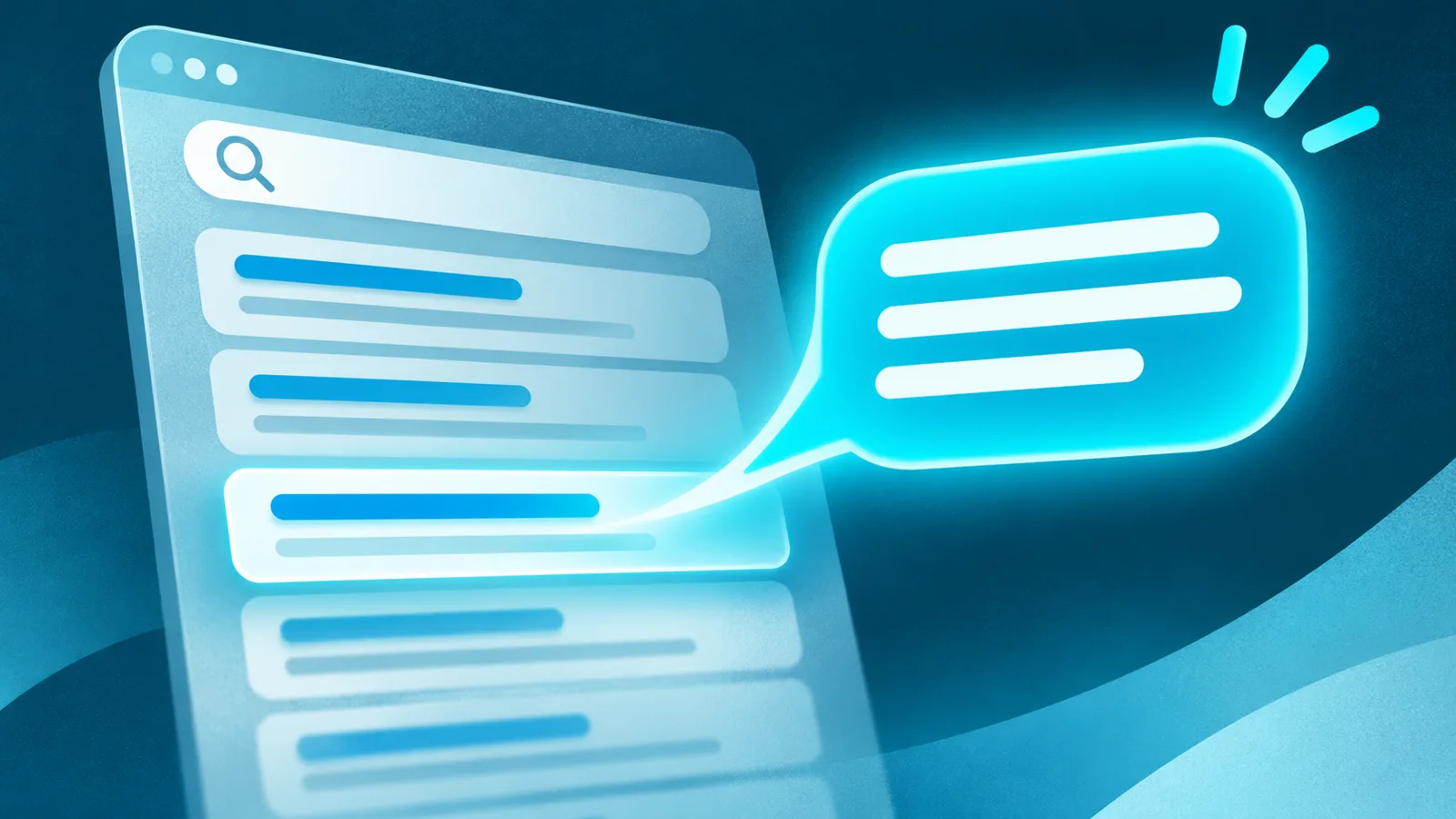
Somewhere around 2021, a lot of smart organizations paid good money for a website that did everything right. Fast-ish, mobile-friendly, nice photography, a homepage slider with the mission statement across it. It ranked. It converted. Everybody high-fived.
Then the internet changed the rules mid-game and didn't send a memo.
Today, a growing share of your future customers never see a list of links at all. They ask ChatGPT, Google's AI Overviews, Perplexity or Siri a question and get a written answer back. So the question isn't only "Do we rank?" anymore. It's "Does AI recommend us?" For a lot of sites built between 2020 and 2023, the answer is no. And it has nothing to do with how good the organization is. It's about how the website was built.
Ten Blue Links Had a Good Run
For about twenty years, search worked the same way. Someone typed a few keywords, scanned ten blue links and clicked whichever looked most relevant. Your website's whole job was to earn a spot on that page.
AI search skips the list. Tools like Google's AI Overviews and ChatGPT read dozens of websites, pull out the most useful bits and write one direct answer. Sometimes they name a few businesses or link a handful of sources. A lot of the time, the person gets what they need without clicking anything.
That quietly rewrites what "visibility" means:
- 01Being cited is the new ranking. If an AI tool mentions you in its answer, you're in the conversation. If it doesn't, you're invisible, even if you'd still rank well in a traditional search.
- 02Fewer clicks, better clicks. The people who do click through from an AI answer have usually already decided you're worth a look. Your site needs to close the deal fast.
- 03Machines read your site before people do. Before a human ever lands on your homepage, an AI system has read it, judged it and decided whether to trust it.
Why Your 2021 Website Is Getting Ghosted
Most sites from this era were built well for their time. They just weren't built for a reader with no eyes and very little patience. The gaps we see over and over:
- 01No structured data. Schema markup is the behind-the-scenes code that tells machines exactly what you are, what you offer, where you are and who you serve. Most sites from this period have little or none.
- 02Vague service pages. A page titled "Solutions" with three lines of marketing copy gives AI nothing to quote. Specific pages that answer real questions get cited. General ones get scrolled past.
- 03Words trapped in pictures. Text inside a hero image, a slider or a downloadable PDF brochure is hard for AI to read and very easy for it to ignore. Remember that slider from the intro? It's been talking to nobody.
- 04Years of digital clutter. Plugins, tracking scripts and oversized images pile up. Slow pages frustrate visitors and send a poor-quality signal to search systems.
- 05Accessibility gaps. Missing alt text, weak color contrast and unlabeled buttons shut out visitors with disabilities. They also make your site harder for machines to interpret, since a lot of what helps a screen reader helps an AI reader too.
None of these mean your site was a mistake. They mean it was built for the internet of 2021, which, as it turns out, was a while ago.
What AI Is Actually Looking For
Nobody outside the AI companies knows exactly how each system picks its sources. But the patterns are consistent, and they line up with good old-fashioned best practices:
- 01Clear, direct answers. Say what you do, who you serve and how it works, ideally in the first few sentences of the page.
- 02Structured data. Schema for your organization, services, location, reviews and FAQs, so machines don't have to guess.
- 03Question-based content. Headings and FAQs that sound like real people asking real questions: "How much does it cost?" "Do you serve Northern Virginia?"
- 04Proof you're legit. Named team members, real case studies, client reviews, awards and the same business info everywhere it appears online.
- 05Speed and accessibility. Fast, mobile-friendly pages built to modern accessibility standards. Easier for everyone to use, people and machines alike.
None of this is a trick or a hack. It's just what a well-built website looks like in 2026. We wrote about the same idea from a different angle in why clarity beats polish.
Why 2027 Is the Date to Circle
AI search isn't a phase. Every major search and assistant platform is heading in the same direction, and the gap between AI-ready sites and everyone else is only going to get wider. The organizations that update now get cited while their competitors are still figuring out what happened.
There's also a regulatory clock ticking. In April 2026, the Department of Justice pushed back its compliance dates for state and local governments: entities serving 50,000 or more people now have until April 26, 2027 to bring their websites up to WCAG 2.1 Level AA accessibility standards, and smaller governments have until April 26, 2028.
To be clear, that rule covers public entities, not private businesses or nonprofits. But it's a pretty loud signal about where standards are heading. If you work with government agencies, apply for public funding or serve the public, expectations are already rising. And accessibility lawsuits against private websites were around long before this rule showed up.
Waiting has a cost, too. Every month your site isn't AI-ready is another month of answers recommending someone else.
Good News: You Probably Don't Need to Start Over
If your site was built in the last five or six years, the foundation is likely solid. Your brand, your content and your structure still have real value. What's missing is the layer that makes it fast, accessible and readable by AI. That's a website refresh, not a rebuild.
A modern website refresh typically covers:
- 01An updated design that looks current without losing your brand
- 02Structured data and schema, so AI tools know exactly who you are
- 03Rewritten key pages with clear answers, FAQs and question-based headings
- 04Speed and performance cleanup across images, plugins and scripts
- 05Accessibility improvements toward current WCAG standards
- 06Easier editing, so your team can keep content fresh without calling a developer
New tools have made this work faster and more affordable than it was even a couple of years ago. Updates that used to take months can often happen in weeks. (Still on the fence? Our redesign vs. refresh breakdown can help you figure out which one you need.)
Not sure where your site stands? Request a free website review and we'll show you how your site scores on speed, accessibility and AI readiness, plus what it would take to get it ready for 2027.
Quick Answers, Zero Blue Links Required
What does it mean for a website to be "AI-optimized"?
It means AI tools like ChatGPT and Google's AI Overviews can easily read, understand and cite it. In practice: clear answers, structured data, question-based content, fast load times and accessible design.
Will my website stop showing up on Google?
Not necessarily. Traditional search results still exist. But more searches now show an AI-written answer first, so sites that don't get cited in those answers get seen and clicked less often.
Do I need a completely new website?
Usually not. Most sites built between 2020 and 2023 can be refreshed with modernized design, structured data, rewritten key pages, and performance and accessibility fixes, all without starting from scratch.
Does the 2027 ADA deadline apply to my organization?
The April 2027 Title II deadline applies to state and local government entities. Private businesses and nonprofits aren't covered by that rule, but they can still face accessibility claims under other parts of the ADA, so meeting current standards is a smart move for everyone.
How long does a website refresh take?
It depends on the size of the site, but many refreshes take a few weeks rather than the months a full rebuild usually requires.
Try This
See your site the way AI does. Open your homepage, select everything (Cmd+A or Ctrl+A), copy it and paste it into a plain text document. No images, no sliders, no design. Just words. Now read it like a stranger. Can you tell what you do, who you serve and where, in the first few lines? If the answer is buried, missing or currently living inside a photo, that's exactly what AI is seeing too.
One Last Thought
Your website didn't get worse. The reader changed. The good news is the new reader wants the same things your best customers always did: get to the point, prove you're real, and don't make me wait.
Built your site somewhere between 2020 and 2023 and wondering if it's still pulling its weight? Let's talk about a refresh. Want to score your own site first? Run it through our simple AI-ready checklist.
Start a Project →Source for DOJ deadline: Seyfarth Shaw via Legal 500; also confirmed by Campus Technology.
Continue Exploring
Service
WEBSITE DEVELOPMENT
We offer a complete suite of web development services tailored to your needs. From custom websites and powerful e-commerce platforms to high-performing landing pages and ongoing maintenance and hosting, we design, build, and manage websites that are as smart as they are stunning.
Case study
DC Villages
We partnered with DC Villages, a collaborative network of thirteen nonprofit organizations serving neighborhoods across the District of Columbia, to create a unified brand and digital presence that reflects their shared mission. From a custom illustrated logo and approachable brand system to an easy-to-navigate website and ongoing marketing support, our work helps bring clarity, connection, and visibility to a network built on collaboration and care.
Next step
Start a Project
Tell us what you need. We typically respond within one business day.
Let's build it
Start a Project
If this article sparked a next step, tell us what you need. We typically respond within one business day.
Start a Project